In which I hero-worship her. Because I haven't done enough of that already.
I first read Song of the Lioness when I was 13, and everything else shortly afterward. The Trickster and Beka Cooper series as they were published. I have read them all innumerable times, and own them all. When some unknown person stole (ie borrowed and never returned) my Lioness Rampant, I sort of grieved for it. These books are my comfort bedtime reading, and as a result, I have most of them sort of memorized. I thought I could never love them any more than I already did.
And then Mark-who-reads started reading them.
And then suddenly, they were ten times more fabulous. Because if there's one thing I love about Mark's chapter-by-chapter reviews, it's his insightful commentary on something so new to him, and so beloved by the rest of us.
Because at age 13, there was a lot I took for granted. I found it awesome that a girl could disguise her gender for eight years to train to be a knight, but I didn't realize just how revolutionary that was -- for 1983, that is. There was nothing like it in the 90s, and in fact, I don't think there's anything like it even now. When I was growing up, if you wanted female protagonists, you had to choose between Laura Ingalls Wilder, Nancy Drew, or the American Girl dolls, all of which are dated, in their times and their attitudes towards women in the world. Books that cheered girls for being girls were few and far in between, and books that showed a character cross-dressing? Well, others like that haven't really been written yet.
Thursday, November 22, 2012
Tuesday, September 25, 2012
Show some Mercy please, Moffat
[Authors' Note: This was written before 07x04 aired. Neither of us have seen it yet. Perks of full-time jobs and grad school!]
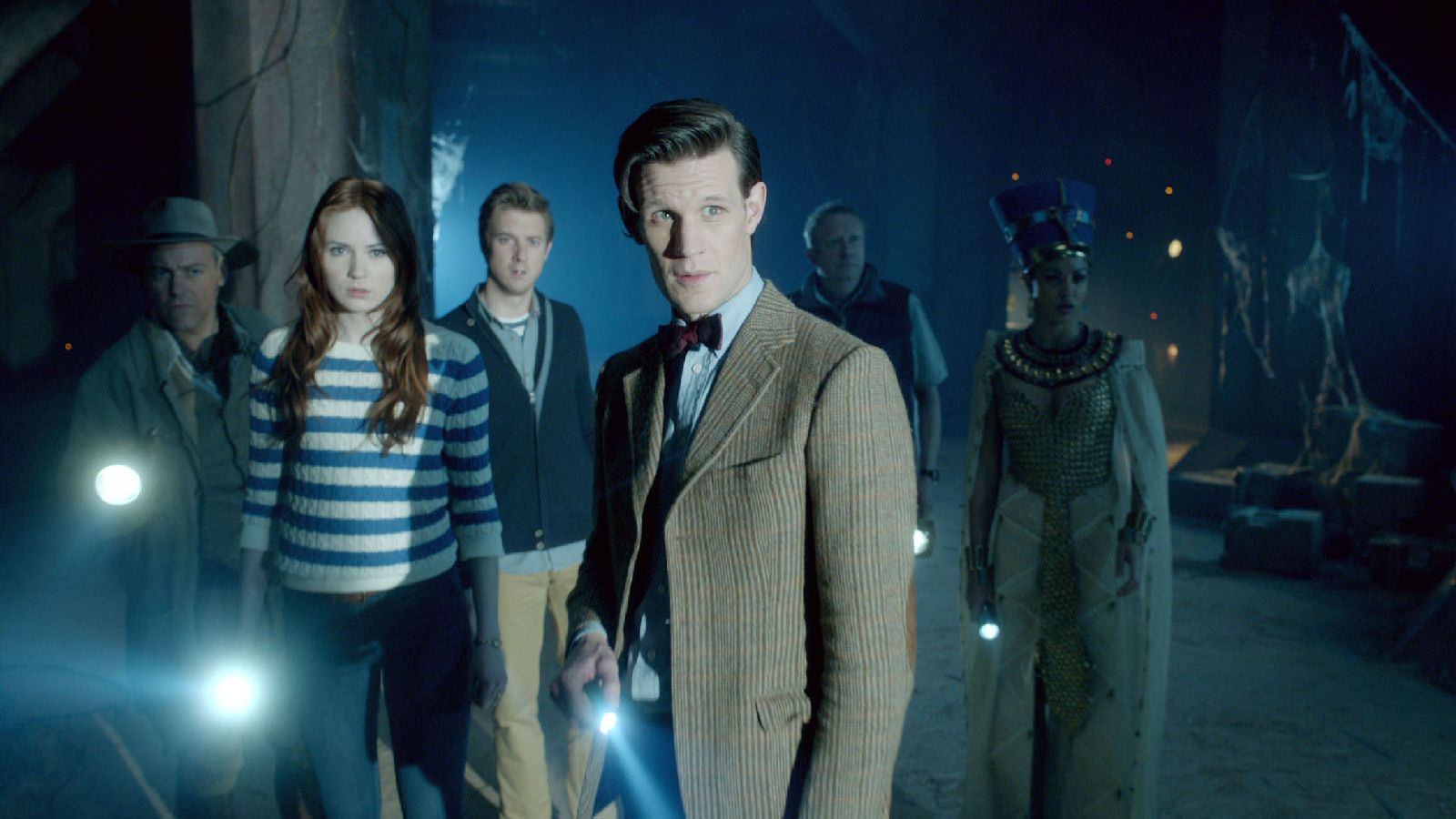
September has arrived, and with it, a new season of Doctor Who. And it’s been great to have our beloved show back on the screen. We’ve liked these past three episodes. Really. They’ve been solid works of television. We’ve laughed at the funny lines, and enjoyed these last few moment of Amy and Rory. But we’re so used to Doctor Who being the the fandom of our hearts, to making us react viscerally, to sparking the type of passion that we always associate with our favorite stories. And that’s simply not there when we watch these episodes.
The big issue is, well, that the big issues aren’t there. That is to say, they’re beneath the surface. Seriousness is lurking behind the funny facade of each of these stories. But it’s either ignored, or treated quickly and dismissively, so that we can get back to saving the universe and do a good bit more running. And that’s not what our favorite show is supposed to be. We love Who so much precisely because it takes time away from the action to treat seriously and deeply with very real, emotional issues. It may not happen every single episode, but it is part of the new show’s legacy, and so far, this season has not shown signs of carrying on that legacy.
Friday, August 24, 2012
A Geeky Soundtrack
So what if you leave us in floods of tears? That's good television. That's great television.
Benjamin Cook, in Doctor Who: A Writer’s Tale
If there’s one thing we love, it’s a movie or show that tugs at our heartstrings, that almost begs us to love it. Of course, there are many of these pieces, and many ways to do it. But we would argue that there is one absolutely brilliant way to do it -- and that is through music. Movies or TV with marvelous, inspiring soundtracks are still not an everyday occurence, so when the brilliant ones come along, we take note. And these are ones that deserve much notice.
Doomsday by Murray Gold
In terms of number of tears shed, it’s hard to beat the series 2 finale of Doctor Who. And a good portion of that is due to Murray Gold’s stunning work here -- so simple, yet so elegant and effective. Starting with a simple piano keeping time alongside vocals perfectly accompanies the devastating moment when the Void closes, the Doctor trapped on one side and Rose on the other. You can almost see their faces pressing up against the wall that won’t let them through. The bass added provides a gorgeous segue to the time that passes for Rose, the driving, the final meeting with the Doctor on Bad Wolf Bay, and the utter heartbreak that happens there.
Song of Freedom by Murray Gold
But Murray Gold can write happy music as well. And if there's anything happier than this, well, I don't know it. The universe has been saved. All the Doctor's companions are flying the TARDIS back home with him. There are hugs, smiles, laughs, and for one moment, one shining moment, you can believe that everything will be alright, and that this show won't tear our hearts to pieces again.
Tuesday, July 17, 2012
F*ck you, she's awesome -- Part Two
Because our first edition was so successful, and because you can never do enough to cheer for these women.
Also, as we said in the first post--any ladies you think should be on our ever-growing list? Which other women are too awesome for words? Share with us!
Sunday, May 27, 2012
A newbie's belated review of The Avengers
I did not queue up opening weekend to see The Avengers. I saw it a few days later. And I did not read the comics, follow the rumors and blogs, or wait in anticipation at all. In fact, I wasn't sure whether I even wanted to see it. But Suzanne told me I should, so off I went.
And I'm very glad I did. And therefore, I can say, if you are like me -- if you do not read comics, if you don't always enjoy excess violence, if you think that action movies have to have a heart -- you will like this movie anyway.
The main reason? It was written by Joss Whedon. And in case that isn't reason enough for you, I'll expound: Joss does things right. I may not have seen even half the things that he's famous for, but I know that much.
And one of the things he does best is clever, whip-snapping, funny dialogue. It's practically a Whedon requirement. And here Tony Stark gets most of it, and of course delivers it brilliantly, with the requisite amount of sass and sarcasm. There are also great visual gigs -- from Grand Central station getting destroyed and no one seeming to care, to the Hulk punching Thor's hammer, to the fantastically awkward post-credits scene. Not being familiar with source material, I don't know what this movie would have been in different hands. But one thing is clear -- that when Joss came on board and grabbed the script to do an unrestrained rewrite, things got exponentially better.
And I'm very glad I did. And therefore, I can say, if you are like me -- if you do not read comics, if you don't always enjoy excess violence, if you think that action movies have to have a heart -- you will like this movie anyway.
The main reason? It was written by Joss Whedon. And in case that isn't reason enough for you, I'll expound: Joss does things right. I may not have seen even half the things that he's famous for, but I know that much.
And one of the things he does best is clever, whip-snapping, funny dialogue. It's practically a Whedon requirement. And here Tony Stark gets most of it, and of course delivers it brilliantly, with the requisite amount of sass and sarcasm. There are also great visual gigs -- from Grand Central station getting destroyed and no one seeming to care, to the Hulk punching Thor's hammer, to the fantastically awkward post-credits scene. Not being familiar with source material, I don't know what this movie would have been in different hands. But one thing is clear -- that when Joss came on board and grabbed the script to do an unrestrained rewrite, things got exponentially better.
Monday, April 16, 2012
C2E2 - The dream I didn't know I had
I’ve never been to a con before. Why, you ask? The big comic-cons are on the coasts, much too far away. The Harry Potter cons that I thought about going to were always during the summer. All of them are pretty expensive. I always wanted to go -- I was beyond jealous of Suzanne when she made it to the NY Comic-con this year. And yet, when the matter of going to my own comic con came, I was hesitant. I don’t read comics. Would I find anything to enjoy?
Turns out, I needn’t have worried. Three days at C2E2, Chicago Comic and Entertainment Expo, were some of the best geeky times I’ve ever had. By far the best decision was going in costume. I’d never cosplayed before, and never really dreamed I could. My sewing skills are hopeless, and neither my budget nor my ambitions are big enough to spend the months and hundreds that some people spend gathering together the perfect outfit. So it was a stroke of luck when a wonderful friend, Jorie (who made herself a fantastic Venetian Hooker Dress), offered to make a costume for me less than two weeks before the con. After an evening of brainstorming, we had an idea. A week of late nights of packing and sewing and ironing later, I had a sari. A TARDIS sari. I rocked it. And my boyfriend rocked the Tenth Doctor suit.
And here is my advice about cons: cosplay. Because there is nothing like people asking to take your picture to make you feel confident and amazing. Over 5 hours on Friday, at least 50 people took our picture. That was before we entered the costume contest, and counting became impossible. And it was equally as enjoyable to admire the costumes that everyone else was wearing. There were plenty of Doctors (Four, Nine, Ten, Eleven), Amy Pond, Craig Owens, and a TARDIS or two (who were not as cool as I was). There was Katniss, Effie and Haymitch, a few Kaylees, a Gandalf, a Princess Tiana, and a Captain Jack Sparrow who looked exactly like Johnny Depp. And those were just the ones that I knew. Hundreds of other people were cosplaying video game and comic characters that I couldn't begin to identify.
But of course, there was way more to this than cosplay.
Labels:
c2e2,
comic-con,
comics,
conventions,
cosplay,
doctor who,
geek culture
Friday, April 6, 2012
Why I Love Downton Abbey -- and why there's nothing wrong with that
In spite of its success, Downton Abbey has been maligned by critics on both sides of the Atlantic this year. Some of it is just criticism -- Season 2 had an awful number of poorly done plots. But much of it has been directed at this firestorm of controversy asking -- why do we love such a classist show? Isn’t it a bad thing, to be nostalgic about it? And aren’t we bad for liking it?
I can only speak from personal experience, but I will say that I did not decide to start watching the show, or start loving it, because it was glamorous. Glamor is all very shiny, but it has to have a heart and soul. And however much the cares of the characters at Downton can sometimes feel trivial, they represent something deeper that we all care about. Sure, to change clothes three times a day, to wear a tux or a custom-made dress to dinner every day seems superflous. But don’t we spend a lot of time buying our clothes or perfecting our appearances? Perhaps the Earl and Lady Grantham’s reaction into losing their half their spacious home to soldiers seems overblown -- but don’t we all value our personal space? For the Grantham ladies, fighting the entail is not trivial, it’s fighting an unjust law that regulates their future.
To answer the first question, we love it because it is, for the most part, a really good story. The cast is large, and we manage to care about them each in our own way -- to hope for Gwen’s employment, to cheer on Anna and Bates, to boo Richard Carlisle, to wish for Matthew to stop tormenting himself, to hope for Daisy’s independence, to shake our fists at Thomas’ schemes, to laugh at the Dowager Countesses’ quips. Monday, March 26, 2012
And the Games begin
Whatever else people might say about the The Hunger Games, no one can deny that it is an extraordinarily addictive trilogy. Though Laura read it a year ago and Suzanne read them last week (very late to the party), we raced through them alarmingly quickly, both staying up far later than healthy to find out what happened next. I think it’s safe to say we haven’t read a book this quickly since Harry Potter was last released. We could write an entire post just reviewing the books themselves, but once again, Mark of Mark Reads basically shares all our opinions on everything. Essentially: we think that the trilogy has its flaws. We noticed these flaws throughout, and there were always certain bits we felt were missing or could have been fleshed out more. Did that prevent us from enjoying the books IMMENSELY? Not in the slightest.
We definitely have Harry Potter to thank for preparing us all too well for this movie. If you look at our Lord of the Rings posts you will note our deep problems with, perhaps one would say resentment of, the Harry Potter film franchise. They are not good adaptations. They have constantly disappointed. But they did teach us one thing: Never go into a movie adaptation of a book you love with high expectations. And we didn’t, here. We had read a bunch of advance reviews saying it was a fabulous adaptation, but we weren’t going to believe it. We were excited, but kept telling ourselves not to get our hopes up.
Thursday, March 15, 2012
Beauty in the Mystery: The Magic of The Night Circus

“This is not magic. This is the way the world is, only very few people take the time to stop and note it. Not a one of them even has an inkling of the things that are possible in this world, and what's worse is that none of them would listen if you attempted to enlighten them. They want to believe that magic is nothing but clever deception, because to think it real would keep them up at night, afraid of their own existence.”
I did not realize just how lacking the word magic was until lately. Until I read The Night Circus.
For here is a novel that, while written in English, seems to point out the utter failure of the language to describe all that goes on within its pages. Visitors to the Le Cirque des Rêves -- as well as followers, performers, creators -- none can really seem to describe what the circus really is. One character is called a magician, though he does no magic in the showy sense, and all his work happens from a distance. Another titles himself the Enchanter. A third is the illusionist, though her performances are far from illusions. So many of the synonyms for magic -- conjuring, sorcery, divination, witchcraft, to name a few -- seem to point out the trickery, the falseness, the suspicion of magic. Even enchantment, the most positive synonym in the thesaurus, can carry negative connotations. Magic is often misunderstood -- it is scoffed at, hated, or feared, and sometimes all three at once.
Yet in the world of fantasy, it is not only understood, but systematic. Pick your novel or series, and if magic is prominently featured, it is sure to be the domain of the protagonist. The main character discovers their abilities, and must learn to use them -- usually with the help of a school, books, or a mentor. The audience reads what they read, hears what they hear, learns what they learn, and so begins to understand the system of magic that a particular author has designed for their world.
Tuesday, February 7, 2012
Timey Wimey: How Fantasy Taught Me About History
I was a history major. I studied it for four years. So it’s somewhat shaming to admit that there are many things I don’t know. Not that I could ever know everything about history, because that’s just not possible. But that there are big things I didn’t know, really big things, is sort of embarrassing. Maybe it has something to do with the fact that by college, sick and tired of learning survey US History, I decided to concentrate in European history, which left me with a great understanding of Europe’s complex politics, but a lack of in-depth study on the issues that had been skated over so many times in survey classes in elementary, middle, and high school. Individual issues are one matter. A general understanding of history is another.
Ironically enough, it was fiction that helped me understand this. To be specific, fantasy -- Tamora Pierce’s fantasy. Those of you who are Tammy fans will know that a major focus of her Tortall books is female empowerment. For those of you who haven’t... well, they all started with Alanna, who wanted to be a knight, not a lady. So she disguised herself as a boy, switched places with her brother, and went to become a page. She spent 8 years disguised as male, and her sex was only revealed shortly after she attained her knighthood. But one female knight, even a legendary one, didn’t stop all sexual discrimination in the realm. Daine, a country girl who has an unusual connection with animals, faces plenty of gender discrimination merely for not wearing skirts. Ten years later, Kel is the first woman to legally become a knight, and is faced with hazing, bullying, and even a probation year from the training master.
Labels:
fantasy,
feminism,
history,
tamora pierce,
timey wimey,
tortall
Sunday, December 4, 2011
The Brilliant Creation That is Mastiff
It took me awhile, but I finally realized why it took me so long to warm up to Beka Cooper. She is the first Tortallan protagonist who I (Suzanne) genuinely see a lot of myself in--and when I was reading Terrier and Bloodhound, I did not like what I saw. The terrible shyness and fear of speaking in front of large crowds, the strident adherence to guidelines and rules, the tireless dedication to work, the taking of everything far too seriously. It hit too close to home. These are all traits that I possess, and they are things that I do not necessarily like about myself. It was difficult seeing them on the page. It was difficult to accept that someone so similar to me could be a hero in one of Tamora Pierce’s stories.
And yet, by the time we get to Mastiff, there is no question that Beka is indeed a hero.
Tammy doesn’t wait for us to catch up to Beka, in the three years since we’ve seen her. She doesn’t wait for us to get to know her fiance. For if we ever thought that Tamora Pierce lacked gusto, nerve, or oomph, we are proven wrong by the first sentence of this book:
We buried Holborn today.
Friday, December 2, 2011
Turning My November Around

Being a recent college grad is hard. Being a recent college grad since the economic shithole in 2009 is torture. Being a recent college grad since the economic shithole in 2009 who has no idea not only of life plans, but of any employment prospects in general, sucks.
This is where my life was a month and a half ago. In general, I was bored. Not a great place to be.
And then I stumbled upon NaNoWriMo’s website. I’d vaguely heard about the challenge, called National Novel Writing Month by those not in the know, to write 50,000 words in 30 days. And on a whim, I decided to do it. After all, if I couldn’t find time to write 1,667 words a day when I was dissatisfied with life, when would I be able to do it?
Monday, October 3, 2011
A Dazzling End

Following this finale, it’s really funny to go back and re-read our Let’s Kill Hitler reaction post, from what seems like so long ago already. In that, our biggest concern with the second half of Series Six was that Moffat had built too large of a house of cards this time around. That, as io9 recently put it, he wouldn’t catch all the balls he was juggling in the finale. He was doing so many wonderful, fascinating, unique things to the show, to the Doctor’s, the Ponds’, and River’s plotlines--but would it all come together in a way that both made sense and was satisfying?
In that sense, this finale did not disappoint in the slightest. Some things felt a bit rushed, yes, but that seemed mostly to be a consequence of the fact that the finale was only one episode long (which we’ll deal with later). And in the end--in those last ten minutes especially--everything felt complete. It made sense. The Doctor evading death was not a hand-waving, timey-wimey thing this time, as it was in The Big Bang last year. His emotional journey--at least for this season--has been completed in a way that actually brings us closure. River’s biggest mysteries were solved in a way that did not feel ret-conned. Sure, there are still some questions, but we were not left with the burning, gaping holes we were left with at the end of Series Five. And after all the doubts we had about Moffat’s ability to pull this off, seeing it all play out in this way was so incredibly satisfying.
Wednesday, September 28, 2011
F*ck you, she's awesome
The fact is that there aren't enough decent female characters out there. But when they do appear, they inspire. They are something to celebrate, to defend, to admire. The characters that when someone starts to complain about, we can't help but defend. What would the world be without them? We each posit our respective lists of top five (and more) female characters in the sci-fi and fantasy we read/watch.
Sunday, September 18, 2011
"What's he doing?" "He's saving us."
It just might be the understatement of the year to say that in this half of the season, the writers are pulling out all of the heartbreaking stops. Last week we were floored and moved by the tragic beauty that was The Girl Who Waited. And this week, we are presented with an extraordinarily fantastic episode that is possibly even more heartbreaking and tragic: The God Complex.
No one comes away from this with a happy ending. By the end of this episode, every character we meet is either dead or forced to say farewell to a dear friend who has changed their lives irrevocably. And that statement applies equally to Amy, Rory, and the Doctor. No one is happy, and everyone’s heart is broken.
Sunday, September 11, 2011
Say goodbye, to the world you thought you lived in
The Girl Who Waited was a brilliant example of why we love this show so much. Because when Doctor Who gets it right, it gets it right. At its core, this show is not about time travel or aliens or sci-fi or even saving the world. An episode doesn’t need to have a monster or a villain -- all it needs is a situation that puts the companions and the Doctor in a place where they discover painful things about themselves and have to make difficult choices.

When we first heard the episode title, I naturally assumed it was going to be all about Amy, and perhaps a reflection back on her childhood. It never occurred to me that Amy would have to wait, again. Yet wait she did. "You could spend a lifetime in here.” And she does. It’s progressed from "twelve years, and four psychiatrists,” to thirty-six years, and a lifetime of bitterness and loneliness. To me, the whole episode was an exploration, a magnification, of that small but nonetheless emotionally powerful scene in The Doctor’s Wife, where House manipulates Amy to stumble upon an aged Rory, and then his rotting corpse, surrounded by horrifying graffiti -- HATE AMY.

When we first heard the episode title, I naturally assumed it was going to be all about Amy, and perhaps a reflection back on her childhood. It never occurred to me that Amy would have to wait, again. Yet wait she did. "You could spend a lifetime in here.” And she does. It’s progressed from "twelve years, and four psychiatrists,” to thirty-six years, and a lifetime of bitterness and loneliness. To me, the whole episode was an exploration, a magnification, of that small but nonetheless emotionally powerful scene in The Doctor’s Wife, where House manipulates Amy to stumble upon an aged Rory, and then his rotting corpse, surrounded by horrifying graffiti -- HATE AMY.
Tuesday, September 6, 2011
Sending a child away: or, why the Night Terrors sucked
Clones, as usual, agree completely. It wasn’t that there was anything actually horrible about The Night Terrors. It was just that there wasn’t anything good.
It was terrifying, sure. But that was about all it had going for it. And it never did anything with the terrors - those dolls were creepy to begin with. No new horror for kids, the way gas masks, stone angels, and shadows have been. Whether you consider it scary or not depends on whether you respond to the traditional horror/thriller movie tactics. Laura was terrified, Suzanne was not. But we both were bored. Very bored.
It felt like Fear Him, except that where Fear Her had an interesting alien, a novel way of disappearing a person, and a great child actor, the Night Terrors had... an alien whose capibilities weren’t really discussed or explored, a boring way of disappearing people, and a child actor who didn’t do anything besides look scared. Oh, and there was no wonderful scene of the Doctor carrying the Olympic torch (which he must, by the way), or David and Billie looking cute. On the contrary, Rory and Amy were again shoved away and just got to run around a lot - but unlike Doctor’s Wife, their running scenes were entirely devoid of personality, much less conversation.
It was terrifying, sure. But that was about all it had going for it. And it never did anything with the terrors - those dolls were creepy to begin with. No new horror for kids, the way gas masks, stone angels, and shadows have been. Whether you consider it scary or not depends on whether you respond to the traditional horror/thriller movie tactics. Laura was terrified, Suzanne was not. But we both were bored. Very bored.
It felt like Fear Him, except that where Fear Her had an interesting alien, a novel way of disappearing a person, and a great child actor, the Night Terrors had... an alien whose capibilities weren’t really discussed or explored, a boring way of disappearing people, and a child actor who didn’t do anything besides look scared. Oh, and there was no wonderful scene of the Doctor carrying the Olympic torch (which he must, by the way), or David and Billie looking cute. On the contrary, Rory and Amy were again shoved away and just got to run around a lot - but unlike Doctor’s Wife, their running scenes were entirely devoid of personality, much less conversation.
Tuesday, August 16, 2011
Not just for teenage girls
Sometimes, the extent to which this world is still horribly, unashamedly sexist pisses me off. We are constantly confronted with the sexism of this world, and I have been becoming more and more aware of it. Usually, I can wish that it wasn’t so, and know that sometime, things will change. But sometimes - when I hear Taylor Swift’s “Love Story,” read certain interviews with Steven Moffat, or read about radical Christian groups, just as examples - I realize that it is still happening, still going on, still rampant in this world, this time, in my world. And I am really angry.
Times like that, I turn to Tamora Pierce. For those of you unfamiliar with her work, she is most famous for her five series of books set in the fantasy realm of Tortall. It all began with Alanna, the gutsy short redheaded twin who wanted to become a knight, not a lady. So she switched places with her brother to start her page training, disguised as a boy. She eventually becomes the King’s Champion and a legend by the name of the Lioness. There’s Daine, the outcast of a rural village who has a special ability to communicate with animals, an ability that makes her the kingdom’s greatest gift when immortals descend out of legend to the real world. There’s Kel, the first girl to try for the knighthood undisguised, who faces her own set of challenges. There’s Aly, Alanna’s daughter, who is hampered by her sheltered life and wants to become a spy, and is suddenly thrust into the role of mastermind of an island nation’s rebellion. And there’s Beka, a young policewoman determined to uphold the rule of the law and help the people survive in the worst-off areas of the kingdom.
All her stories, needless to say, are amazing. They’re the kind of fantasy I always hunger for. They’re the books that I’ve re-read more than any other - yes, perhaps even more than Harry Potter - and that I will continue to re-read, because they never get old. They’re the books that are comforting late at night, and inspiring when I’m down. They have great plots, novel ideas, and lovable characters. And I would love them for that alone.
Times like that, I turn to Tamora Pierce. For those of you unfamiliar with her work, she is most famous for her five series of books set in the fantasy realm of Tortall. It all began with Alanna, the gutsy short redheaded twin who wanted to become a knight, not a lady. So she switched places with her brother to start her page training, disguised as a boy. She eventually becomes the King’s Champion and a legend by the name of the Lioness. There’s Daine, the outcast of a rural village who has a special ability to communicate with animals, an ability that makes her the kingdom’s greatest gift when immortals descend out of legend to the real world. There’s Kel, the first girl to try for the knighthood undisguised, who faces her own set of challenges. There’s Aly, Alanna’s daughter, who is hampered by her sheltered life and wants to become a spy, and is suddenly thrust into the role of mastermind of an island nation’s rebellion. And there’s Beka, a young policewoman determined to uphold the rule of the law and help the people survive in the worst-off areas of the kingdom.
All her stories, needless to say, are amazing. They’re the kind of fantasy I always hunger for. They’re the books that I’ve re-read more than any other - yes, perhaps even more than Harry Potter - and that I will continue to re-read, because they never get old. They’re the books that are comforting late at night, and inspiring when I’m down. They have great plots, novel ideas, and lovable characters. And I would love them for that alone.
Monday, July 18, 2011
Our "Deathly Hallows: Pt 2" Review
As we have previously stated on this blog, of all the geeky things we adore in this life, Harry Potter will always and forever be our first love. Yet, as both of us have had endless problems and quibbles with the film adaptations of the books, neither of us were very emotionally invested in the release of the final movie. "It All Ends" came for us four years ago, when the seventh book was released. So I think it took us both by surprise when--as the release date drew near--we both became rather nostalgic, emotional, and filled with a tad bit of regret that circumstances prevented us from attending the midnight premiere.
Circumstances also prevented us from seeing it together, but as we are clones, it came as no surprise that once we exchanged phone calls and emails we had essentially the same thoughts.
First and foremost: After seven movies, seven tries, they finally finally FINALLY got it right. Our major problem with the previous seven movies has been less with what they leave in and leave out (though it is always a disappointment to see what gets cut), and more with the fact that they have never felt like true adaptations. An adaptation is supposed to capture the spirit of the original work, and with a couple of exceptions, the movies never felt quite right, never felt like they captured that spirit. Characters always seemed really out of sync with their literary counterparts, and choices of setting and pace always brought something down. But this time...they captured that spirit perfectly. The beauty of this movie was in the little details, and for once they got those little details down pat. There were parts that were line for line, word for word from the book, like the section with Ollivander and Griphook...especially the part when Ollivander said "the wand chooses the wizard" in exactly the same way he did ten years ago. Brilliant.
Circumstances also prevented us from seeing it together, but as we are clones, it came as no surprise that once we exchanged phone calls and emails we had essentially the same thoughts.
First and foremost: After seven movies, seven tries, they finally finally FINALLY got it right. Our major problem with the previous seven movies has been less with what they leave in and leave out (though it is always a disappointment to see what gets cut), and more with the fact that they have never felt like true adaptations. An adaptation is supposed to capture the spirit of the original work, and with a couple of exceptions, the movies never felt quite right, never felt like they captured that spirit. Characters always seemed really out of sync with their literary counterparts, and choices of setting and pace always brought something down. But this time...they captured that spirit perfectly. The beauty of this movie was in the little details, and for once they got those little details down pat. There were parts that were line for line, word for word from the book, like the section with Ollivander and Griphook...especially the part when Ollivander said "the wand chooses the wizard" in exactly the same way he did ten years ago. Brilliant.
Saturday, June 18, 2011
Gandalf: From Staff-Elf to Maia
How the evolution of Gandalf’s character mirrors
the development of Tolkien’s story

“Gandalf! If you had heard only a quarter of what I have heard about him, and I have only heard very little of all there is to hear, you would be prepared for any sort of remarkable tale.” [1]
Though J.R.R. Tolkien is often accused of creating characters that lack depth, upon further consideration, it is difficult to pick out a major character in The Lord of the Rings trilogy that qualifies as “shallow.” If such a character were to be selected, however, Gandalf would be perhaps last on that list. From the moment he is introduced in the opening pages of The Hobbit, he is a complex and mysterious figure – he comes and goes on mysterious business, never reveals all that he knows, and says barely anything about himself. In the course of The Lord of the Rings and the Unfinished Tales that follow, his role grows and changes exponentially. Yet despite the changes and development his character undergoes throughout the course of the series, despite the new information that is revealed about him, he remains very similar to his first appearance; he is still a character shrouded in mystery. The vast expansion of his personality as a Maiar demonstrates just how little the reader knows about the figure who was named Mithrandir.
the development of Tolkien’s story
“Gandalf! If you had heard only a quarter of what I have heard about him, and I have only heard very little of all there is to hear, you would be prepared for any sort of remarkable tale.” [1]
Though J.R.R. Tolkien is often accused of creating characters that lack depth, upon further consideration, it is difficult to pick out a major character in The Lord of the Rings trilogy that qualifies as “shallow.” If such a character were to be selected, however, Gandalf would be perhaps last on that list. From the moment he is introduced in the opening pages of The Hobbit, he is a complex and mysterious figure – he comes and goes on mysterious business, never reveals all that he knows, and says barely anything about himself. In the course of The Lord of the Rings and the Unfinished Tales that follow, his role grows and changes exponentially. Yet despite the changes and development his character undergoes throughout the course of the series, despite the new information that is revealed about him, he remains very similar to his first appearance; he is still a character shrouded in mystery. The vast expansion of his personality as a Maiar demonstrates just how little the reader knows about the figure who was named Mithrandir.
Subscribe to:
Posts (Atom)